
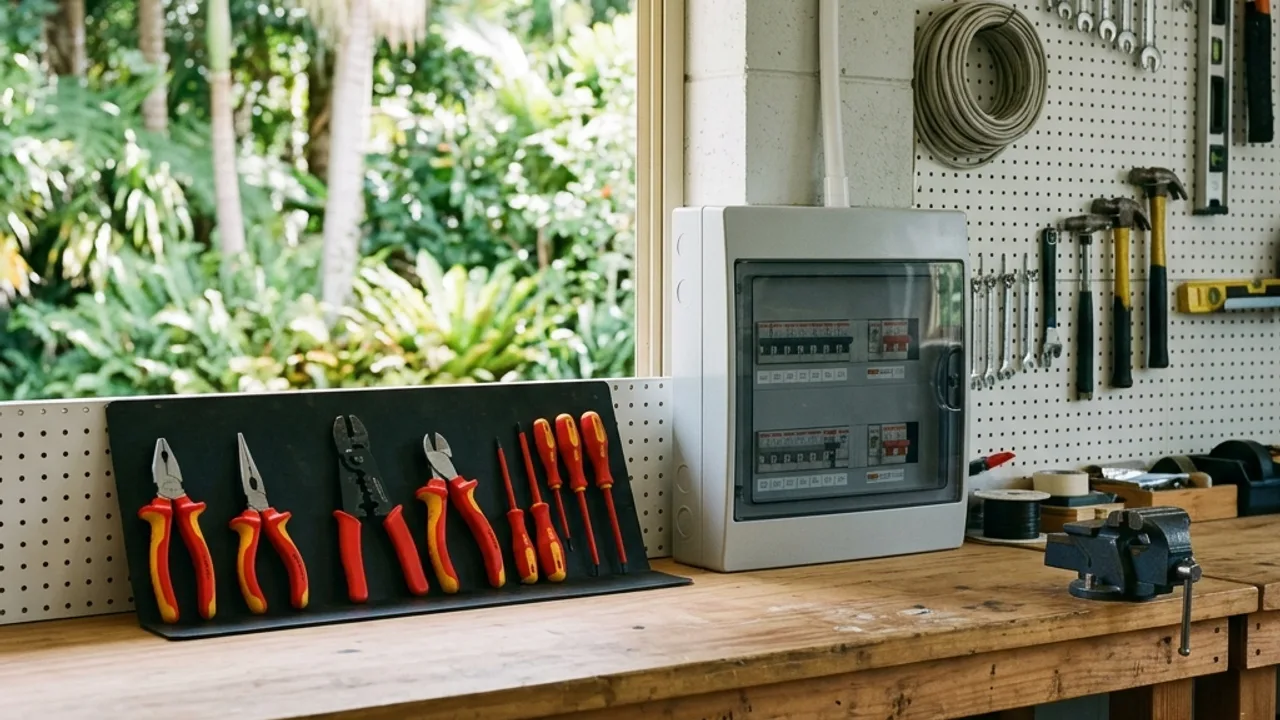
What the guides do
Electrical work becomes easier to discuss when a customer can describe the symptom, property and desired change. We separate urgent danger from ordinary assessment, then organise the practical questions for fault finding, switchboards, safety switches, outlets, lighting, fans and smoke alarms. The guides do not diagnose a property remotely or certify that an installation complies with Queensland law.
For example, a switch that trips repeatedly can be caused by different conditions. It would be misleading to promise a new switchboard before inspection. Likewise, a new outlet may be a replacement, relocation or new circuit. Our content helps a reader ask for the actual scope instead of treating every job as interchangeable.
Each service guide starts with the distinction that changes a quote: a symptom versus a diagnosis, testing versus installation, or replacement versus a genuinely new load. It then names the site details that may alter access or scope. Readers can take those questions to a contractor without assuming that the answer on a different property applies to theirs. We avoid remote estimates because the existing installation and intended work have not been inspected.
The location guides highlight access questions that can change an appointment. A shop tenancy, a unit with managed common areas and a house can require different permissions or outage planning even when they share a postcode. The guide therefore asks about the building and the person authorised to arrange work.
Before a licensed electrical contractor responds
Electrical contracting in Queensland has its own licence rules. Before engaging anyone, check the relevant electrical contractor licence and ask who will attend the property.
When choosing a contractor, ask for the relevant licence details and check the Queensland Electrical Safety Office licence guidance. Obtain a written scope and clarify price, testing, variation approval and access. The contractor you engage is responsible for the agreed work and its terms.
A useful written scope says what has been observed, what will be inspected, which materials and tests are included, and what happens if hidden conditions change the job. An apparent bargain is hard to compare if one offer includes circuit testing and making good while another is limited to installing a supplied fitting. If an outage is needed, ask who will notify occupants and whether a body corporate, landlord or business manager must approve it. These are planning questions, not an assurance about duration or cost.
For urgent work, contact an appropriately licensed provider directly. For immediate danger, call 000.
Consider a homeowner comparing two prices for a new ceiling fan. One offer may assume that the existing fitting has suitable support and switching; the other may include assessing those conditions and changing the controls. Before choosing, ask each contractor to describe the same product, mounting, wiring, testing and any making good. The comparison becomes clearer when exclusions are written down. A similar distinction matters for a switchboard: a quote to investigate a tripping circuit is not equivalent to a proposal to replace the board. Ask what inspection supports the recommendation and who will approve additional work if a different fault is found. These questions help a visitor make a decision without treating a web page as a remote diagnosis.
Check current Queensland rules
Queensland electrical and smoke-alarm requirements can depend on property use, tenancy, timing and the actual installation. Follow the linked regulator guidance for the rule that applies to your situation, then ask a licensed contractor how it affects the job.
If someone faces immediate danger such as electric shock, fire or fallen powerlines, call 000 and follow official emergency guidance. This site cannot dispatch emergency help. For ordinary work, you can describe the job and ask for an assessment.
Electrical safety obligations can change. Revisit the linked regulator page before relying on a rule, and ask a licensed contractor to inspect the property before deciding what work is needed.