
By Electrician South Brisbane editorial team · Updated
A room can feel inconvenient even when its existing lights work: the useful light is in the wrong place, the controls do not suit how you use it, or the fan you want has never been considered with the ceiling and wiring. A better enquiry begins with the result you want in the room, not simply a shopping list of fittings.
Perhaps you want useful light above a work area, a fan in a bedroom or a clearer set of controls. Those are ordinary customer outcomes. Tell the installer which outcome matters most. Mounting, wiring and controls can then be assessed together against the actual product and room.
Describe the room you want improved, including what does not work for you now and any product you have in mind.
Explain how the room is used
Separate the problem from your first proposed solution. “The reading corner is dim” leaves room to discuss useful placement and control; “install six downlights” assumes the answer before those questions have been considered. Explain the activities that matter, the existing fittings and whether you want changes in more than one area.
For a fan, say whether the room has an existing fan or only a light, whether a combined fitting is wanted and which control arrangement you prefer. Product names alone do not explain whether you want separate light and fan control or how you expect to operate them.
The lighting and ceiling-fan service guide distinguishes a straightforward replacement request from an altered installation. If the fitting flickers, has visible damage or behaves unexpectedly, describe it as a fault too; an aesthetic change should not conceal a separate diagnostic question.
Product supply and installation are different promises
If you plan to buy a fitting yourself, ask the contractor about suitability before purchase. A retail description does not establish that the product works with your existing controls, mounting or location. Share the model and manufacturer information so the conversation concerns the actual item.
Confirm whether a quote includes supply, installation, any proposed control changes, removal of the old fitting and testing. Ask what happens if the existing installation is not suitable for the chosen product. These are scope questions, not assumptions about what every electrician includes in a standard price.
For fixed electrical work, use an appropriately licensed person. The regulator’s Queensland licence guidance explains the relevant permissions. Check that the proposed installation and the installer’s licence cover the fixed electrical work.
A fan replacement and a first fan are not the same job
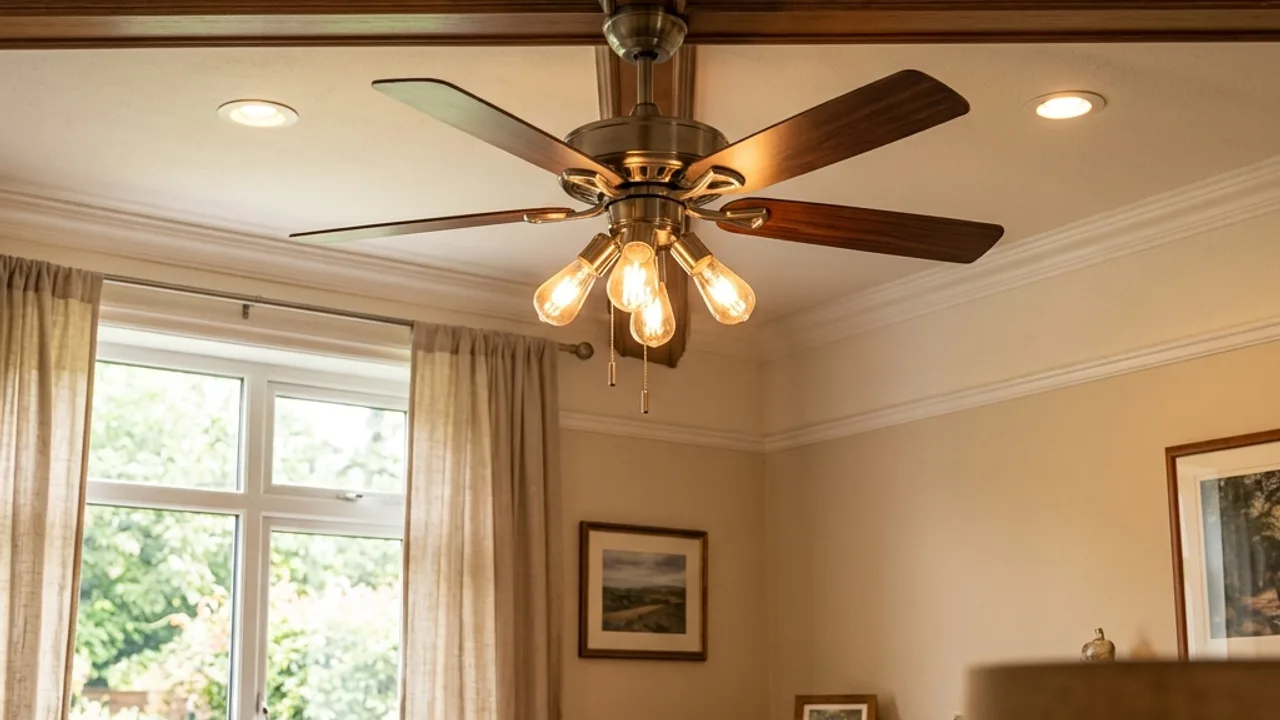
Consider a hypothetical room with a pendant light where the owner wants a ceiling fan with integrated lighting. Calling it a “fan replacement” gives the wrong picture: no fan is there yet, and support, wiring and desired operation need assessment. Describe the existing fitting as well as the proposed change.
Even where a fan is already present, the new product may differ. Ask the contractor whether the quote assumes reusing the existing arrangement and how that assumption will be checked. A useful offer explains the fitting, relevant alterations and any uncertainty rather than guaranteeing an installation duration from a photograph.
For work in a managed building, the apartment access guide adds ownership and permission questions. An approval from a building contact and the electrician’s technical assessment answer different parts of the job.
Send the current fitting and proposed model details if you are seeking a non-urgent electrical assessment. Do not remove a fitting or cover to take a more detailed photograph.
Compare energy using your own inputs
If energy use matters to your product choice, use manufacturer input-power information and the way you expect to use the appliance. Input watts are not the same as a cooling or heating output rating. The Australian Government’s energy-rating guidance explains how power, operating time and your electricity rate relate to running cost.
The job checklist records the product, room, controls and access for an installation assessment. Keep running-cost comparisons separate from the written installation quote.
Variable-power appliances can make a labelled-watts calculation a poor prediction of actual consumption. Where a manufacturer provides consumption data, use that context rather than treating a maximum rating as constant operation. Supply charges, solar exports and other bill components are outside this simple calculation.
Controls can matter as much as the fitting
Think about which switches you use when entering, working in or leaving the room. Explain where a present arrangement is inconvenient and whether you want independent operation of different fittings. The contractor can then assess what is possible within the installation rather than quoting only the product you selected.
If you also want outlets relocated, list that as a separate part of the request. The power point and circuit (a wiring path supplying outlets or lights) guide helps distinguish location changes from supplying a new load. A collection of small jobs is still clearer when each intended result is named.
The electrical quote article gives a useful comparison method for supply, installation, testing and exclusions. There is no universal saving promised by grouping jobs; ask the business to quote the actual combined scope.
Keep access and completion clear
Mention known ceiling-access restrictions, occupied rooms and who can authorise the work. These details help the contractor assess attendance, but do not prove a particular method, duration or price. A home in Highgate Hill and a unit in South Brisbane each need their own property account, not a postcode-based assumption.
Before accepting, ask what completed work will be demonstrated, how the controls will be explained and what product or workmanship terms apply. Keep those answers with the accepted scope so a later question concerns the same agreed installation.
Use the job checklist to record what you already know. Start your lighting or fan enquiry with the room outcome, current fitting and contact details. Include the product model and desired controls so the next conversation concerns the installation you actually want.